Inspired by the magnificent palaces of the 16th century, Palazzo Massimo was built between 1883 and 1887 by the Jesuit priest Massimiliano Massimo, based on a design by Camillo Pistrucci, to house the new Jesuit school. In 1981, the Palazzo was acquired by the Italian Government to become one of the new sites for the National Roman Museum. A radical renovation of the building was entrusted to Costantino Dardi and the Palazzo opened to the public in 1998. Since then, the original installation has been revised and adjusted on a number of occasions, interweaving the various threads of the exhibition using a design based on chronology and theme. By referring to the contexts in which the artefacts were found, this creates the suggestion that different works are jumbled together as in the bustling collections of the 16th century. Now, moving through the rooms of the Palazzo Massimo is like leafing through the pages of a wonderful book. Its four floors contain some of the greatest masterpieces of the entire artistic output of the Roman world: sculptures, reliefs, frescos, mosaics, stuccoes and sarcophagi, originating, like all of the treasures of the National Roman Museum, from excavations undertaken in Rome and the surrounding region from 1870 onwards.
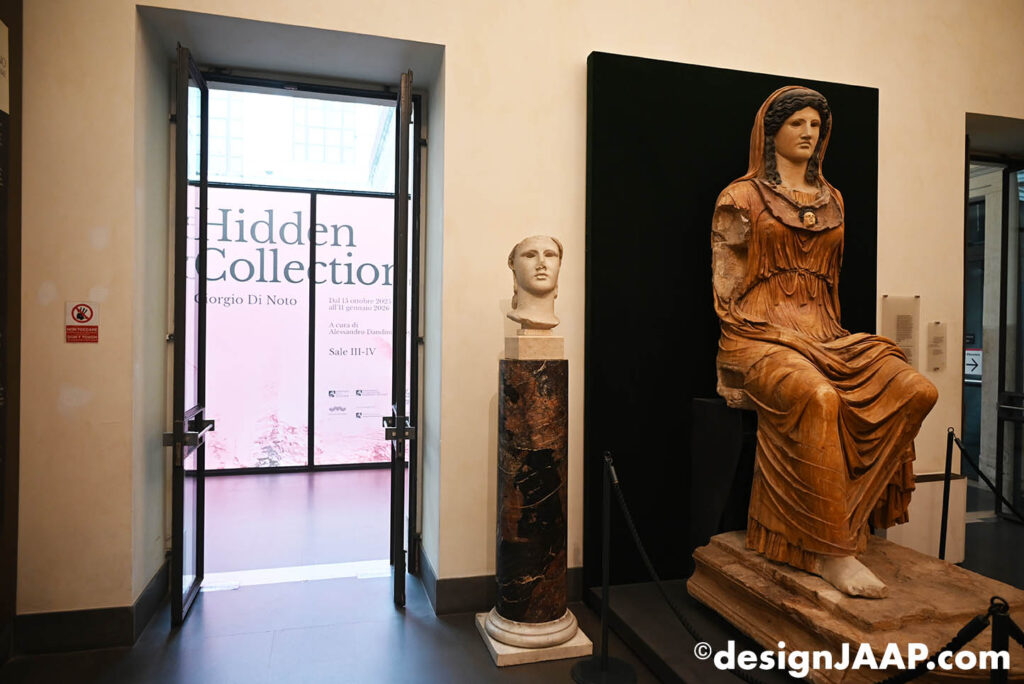
Museo National Romano Palazzo Massimo
Here is a photographic impression of architecture and collection of Museo National Romano Palazzo Massimo in Rome.