Lecce, city, Puglia (Apulia) regione, southeastern Italy. It lies on the Salentina peninsula, or “heel” of Italy, east of Taranto. Possibly built on the site of the ancient Roman town of Lupiae, Lecce was contested by the Byzantines, Lombards, and Saracens after the fall of the Roman Empire. It became a diocese in the 6th century and was captured and elevated to a countship by the Normans in the mid-11th century. The city passed in 1463 to the Aragonese kings of Naples, who fortified it.
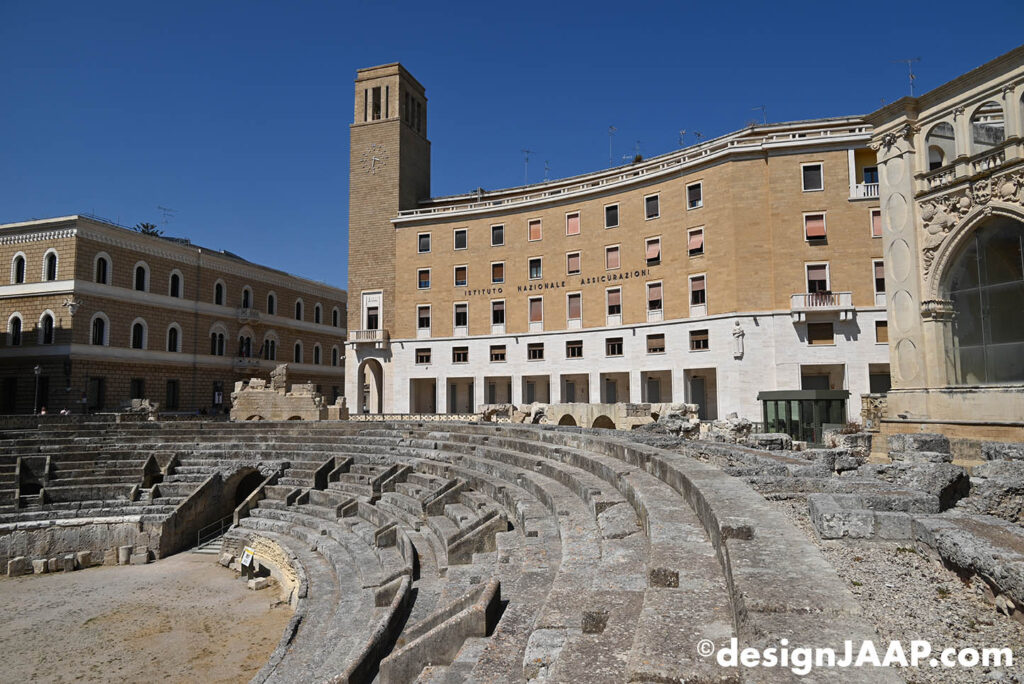
Roman amphitheatre in Lecce
The city’s classical remains include an underground burial chamber of the 4th century BC and a Roman amphitheatre. Lecce flourished in the 16th and 17th centuries and has many examples of Apulian Baroque architecture; many of its buildings are built of the characteristic pietra leccese, a light yellow, easily worked limestone. The cathedral, the Basilica of Santa Croce, and the Church of SS. Niccolo e Cataldo are notable, all rebuilt in the Baroque style.
Here is a photographic impression of the city of Lecce in Southern Italy.